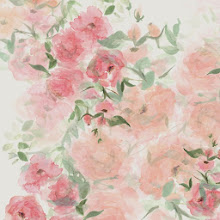
This was an exhibition currently on at the Van Gough Museum when I visited. I really admired these books, they had a precious, delicate feel to them. I think this was mainly because of the sensitivity to materials including paper, which was Japanese handmade paper. I liked this paper because of its transparent and delicate looking qualities. I especially like how this was exploited in some of the books, For example because of its transparancy, the pages and designs underneath could partially be seen, which I think added to the interest of the book. The designs on the pages of the books were very beautiful and I liked the ones depicting nature, with simple subtle details.
Some of the books exhibited were of landscapes, famous places with illustrations of flowers, plants, animals, manners and customs, ceremonial events and erotic scenes. Also designs for Kinono fabrics were included, which I liked and like how it could be linked to modern fashion magazines.
Artists like Hokusai in Japan saw bookmaking as a way of publishing their art. Japanese artists have been highly involved in making book illustrations.
Thursday, 3 January 2008

Van Gough Museum, Amsterdam
I found my visit to the Van Gough museum very inspirational. Vincent Van Gough, a post Impressionist produced work during the time between 1880-90. I admired many of Van Gough's paintings, particularly the landscape paintings and paintings of flowers. I admired his use of expressive brush marks, which added depth and texture to the piece. In some pieces I liked how organic patterns were created from the marks. I thought it was amazing how he combined a variety of vivid colours into a range of different marks. Van Gough took his inspiration from french mainstream art and artists including Claude Monet, Paul Gauguin, Paul Signac and also Japanese woodblock prints.
His life story was also interesting, he had no formal educational knowledge of painting and taught himself with help from various drawing and painting classes. Therefore it was interesting to see how his painting progressed over time. His mental problems must have also had an effect on his work, and in the end Van Gough shot himself, but has been a great influence to many artists including Picasso.
Sunday, 18 November 2007
Platform Gallery, Clitheroe
I visited the Platform Gallery in Clitheroe, where an exhibition called 'Compilation', 'the best of the Platform Gallery' was on. There was many different craft pieces by approximately 100 different craft makers.
I found this exhibition relevant to my latest project on the theme of 'Bloom', as there was a range of art work in various media with floral designs or influences.
Some pieces i found inspiring was:
- Porcelain vases/ wall pieces by Julie Miles
These were simple ceramic pieces with intricate decoration of floral shapes on them in a simple design. Each piece had an organic feel, with the porcelain shaped almost suggesting natural folds with uneven edges.
- Lights by Hanah Nun
A collection of paper lamps with beautifully cut out floral detailling, which were very soft and subtle.
- Autumn Joy and Autumn Glow by Barbara Jepson, both batik and applique
These were my favourite pieces both depicting flowers, they were very vibrant, with warm, bold colours suggestive of autumn. They contained collaged material, stitch and dye, which i thought worked well as a combination.
- Embroidered Textiles by Priscilla Jones
This was a small collection of a vaiation of wall hangings, with collaged fabrics and papers. They were all in soft pastel colours and had a childlike feel, which i really liked.
- Daisy 1, 2 and 3 in ink, acrylic collage and embroidery by Jacqueline Smith.
On these, which were a collection of three wall pieces i liked the variation of media giving an interesting outcome, which looked quite complex.
Monday, 5 November 2007
sustainable design
Talk from Scott Taylor from Designmash. 05/11/2007
Can products be redesigned, so that they are more sustainable and environmentally friendly?
Sustainability = people, planet and profit.
Today much more emphasis is being placed on more ecological designs and people are looking back to nature on helping solve these problems. Organic is becoming more popular amongst the population. Being 'Green' is one of the ways forward to help the people and the planet. This image is becoming very popular, but companies sometimes hide behind this image and want to be seen to be green, usually through their advertising. But when investigated further are actually polluters of the environment.
Some simple things can be improved to help reduce the risks of Global Warming. Small things that are never considered could help change a lot. Such as saving on 'food miles' and growing our own produce such as tomatoes instead of importing them from various countries. This incurs damage to the planet through the fumes off the transport, but also uses up valuable fossil fuels in doing so.
Designers need to consider carefully materials when designing products, such as can it be re-used and recycled. They need to be aware of some key things when designing, which will not only help the environment but also their profits and overall company image. key points in sustainable design:-
Cyclic
Can it be recycled? Some examples of companies using this idea:-
Puma - created 500 shoes from old clothes provided by the general public, which is a nice idea to think that shoes are made out of your old clothes and also makes them personal.
McDonalds - all packaging can be recycled and are bio-degradable.
Eco Log, a Japanese company where suits are made entirely of nylon, so when recycled can be produced straight back in to nylon again.
Solar
Using energy from nature. i particularly like the design produced by Habitat of a grass chair. It is made using cardboard template, which is built around with soil and grass, then the cardboard degrades and the chair shape remains.
Safe
products and by products friendly and safe to the environment.
One company in Sweden allows the waste products of a paper factory to be so safe that the water it goes in to is suitable for swimming.
Canon make their lens in cameras lead free.
Super Efficient
Giving things more than one use or use less materials in the design.
Water bottles in Mexico are made so that they can all be attached together when finished with and made into new designs. This i think is a really good idea and some of the designs that can be produced are quite funky and can be used for various new purposes.
Social
Are productions being made ethically? Some companies have degrading policies for the workers and many problems occur such as child labour. All of these are unknown to the seller.
Fair trade is a company which "Guarantees a better ideal for third world producers.
I never realised that there was so many things to be aware of and consider when creating modern designs, or the smallest things that can be improved if the general public is made more aware. The designer not only has to design the products, but also design them sustainably.
Subscribe to:
Posts (Atom)